Robert Hagan
From Nostalgic Oil Painting Made Easy

ll My Friends

Thinking creatively from the heart
A painting lesson in four parts
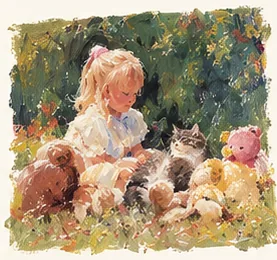
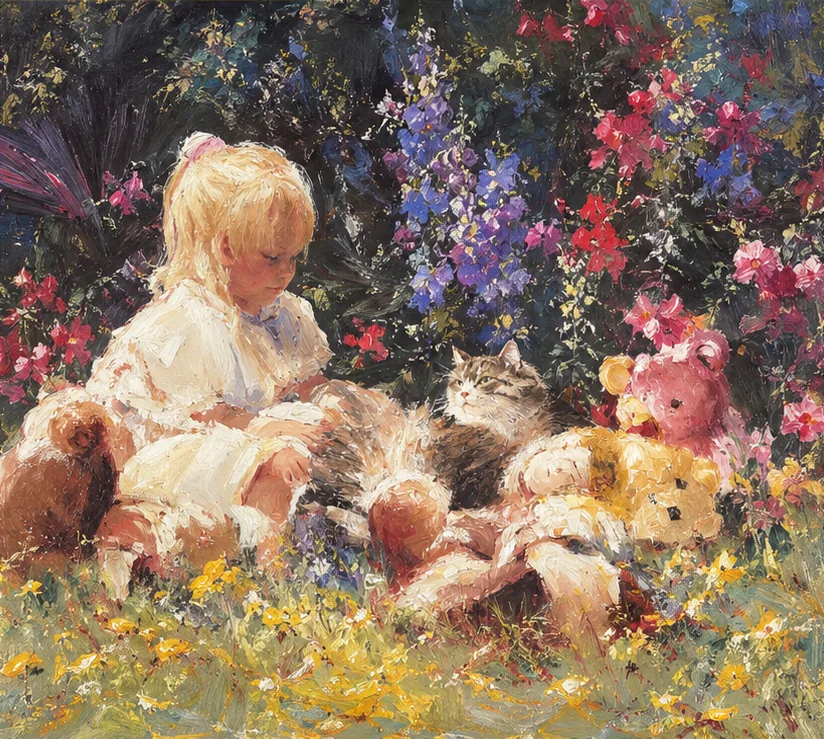
All My Friends: a little girl in a white dress sits in a flower garden with her cat and teddy bears, by Robert Hagan

Once we reach adulthood the moments when we were a child, and lived in a world of make-believe, seem to fade from the reality of our present lives. The pressures of such a life take over and we become real people, and real life! What I am getting at here is there is a time to immerse yourself in the world of the subject. You are not simply painting a little girl with teddy bears — you are painting a child who believes her teddy bears are alive!

Her teddy bears and dolls come to life in her wildly imaginative child-mind. The collections of teddy bears come out to play and have instant life of their own. Her dreamings take her to a world where her toys, and all the creatures from the garden, live and breathe. She talks to them, and they can breathe, and their teddy mouths can really talk and become real people.

We are all children once, of course, but the years tend to dull our memories of the fantasy world we lived in. I do till our memories of the fantasy world we lived in and someone find a window to enable us to re-enter and recapture those precious child-time memories once more. Millions of paintings waiting to be painted. It is simply many years ago, before, there are millions of subjects are there for us to paint.

“You are not simply painting a little girl playing with teddy bears — you are painting a child who believes they are alive.”
Part One

Starting

Photographs and sketches

Before putting paint to canvas, I like to spend time with my reference photographs and make a few simple sketches. This gives me a chance to really see my subject — to feel the shapes, the light, and the story — and to plan my painting in a free and relaxed way.
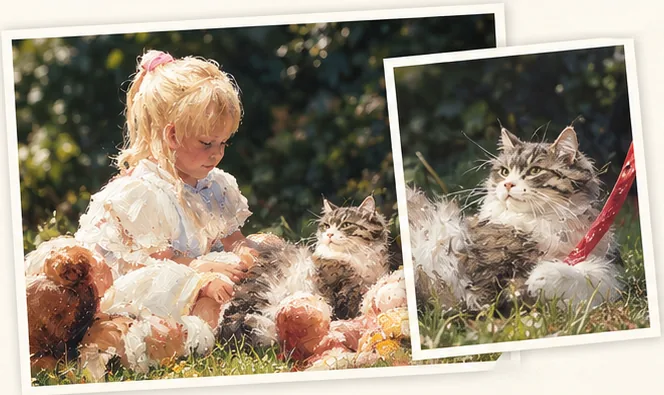
Reference photographs of the little girl with her teddy bears and the cat in the garden
Look and observeStudy your photographs closely. Notice Cortney’s face, her hair, and the beautiful shapes of her head and shoulders. Look for the way the light falls, the gesture of her hands, and the natural, relaxed pose.
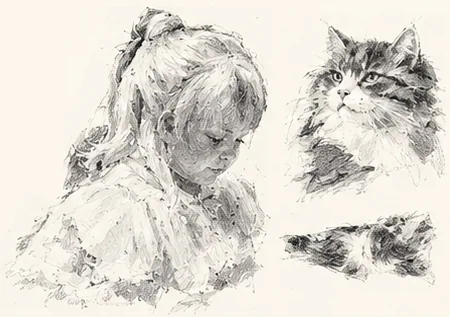
Pencil sketches of the little girl, the cat's head and the cat's tail
Think creatively and simplifyYou are not copying every detail from the photograph. Instead, think creatively and look for the essence of the forms. Simplify what you see — the big shapes, the light and shadow patterns, and the feeling of the moment.
Small colour study of the little girl, her cat and teddy bears
The story and the counterpointThe little girl and her teddy bears are the heart of the story. The cat is an important living counterpoint — a real creature with its own personality. Including the cat adds life, variety and a sense of connection to the garden setting.
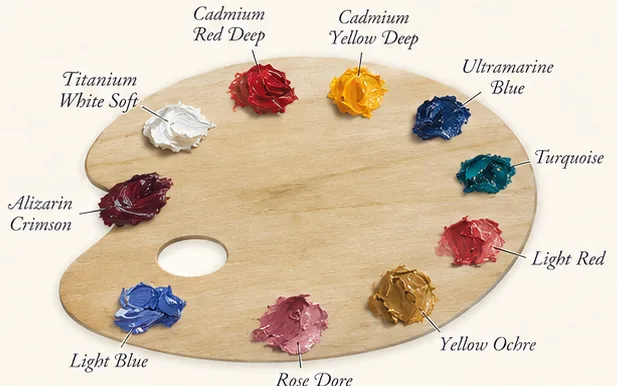
Wooden palette with the colours used for this painting
A simple paletteI use a limited palette of colours to keep my painting fresh and harmonious. Before I begin, I also make a few broad planning sketches and colour notes to explore the composition and values.
The palette · ten colours
  • Titanium White Soft
  • Cadmium Red Deep
  • Cadmium Yellow Deep
  • Ultramarine Blue
  • Turquoise
  • Light Red
  • Yellow Ochre
  • Rose Dore
  • Light Blue
  • Alizarin Crimson
Part Two

Figures & Background

Step by step to a lively painting

The magic of this painting comes from building the figures and the background together. We start with a simple block-in, develop the shadow shapes, then gradually bring out the flesh, fabrics and fur, and finally let the flowers and foliage emerge with free, expressive brushwork. Each stage adds life and cohesion, until the little girl, her teddy bears, her cat and the garden become a single, harmonious scene.
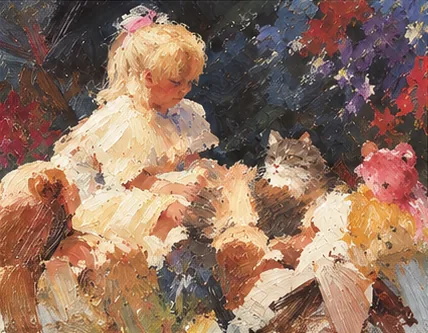
Stage one: the figures blocked in
1 · Block in the figuresBlock in the bears, cat and little girl with the #2 flat brush, keeping the shapes simple and direct. Establish the composition early, placing the main figures in relation to each other and the overall design.
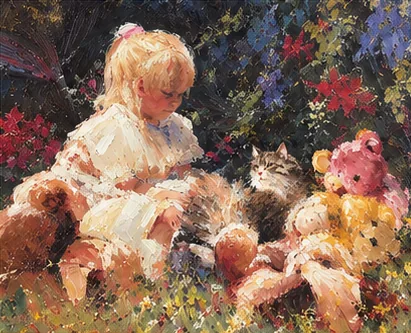
Stage two: the shadow shapes developed
2 · Work the shadow shapesDevelop the shadow shapes first, looking for the large patterns of light and dark. Adjust colors in the shadows by moving toward the opposite side of the color wheel — for example, cooler blues and violets in shadow to enrich the warm lights.
Stage three: the girl's face, hair and dress built up
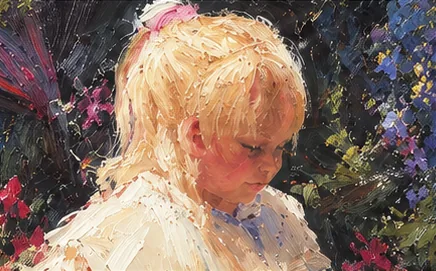
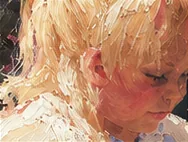
3 · Build the flesh, dress and hairBuild the flesh, dress and hair gradually. Use layered brushstrokes, varying warm and cool notes. Save the brightest highlights for later, allowing the forms to model naturally and stay fresh and luminous.
Stage four: the flower garden background
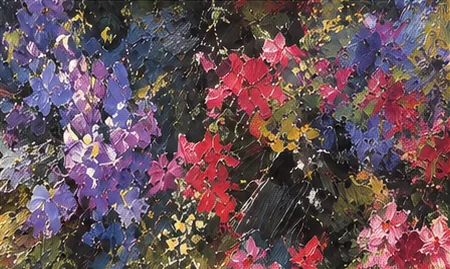
4 · Create the backgroundCreate the background with broad, sweeping strokes, letting the flowers and foliage emerge with spontaneity. Use a variety of brushstrokes and color, allowing some areas to remain loose and suggestive, so the garden feels alive and full of movement.

Details bring the story to life
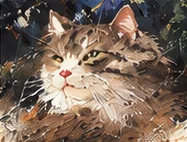
Detail: the cat
Detail: the girl's face
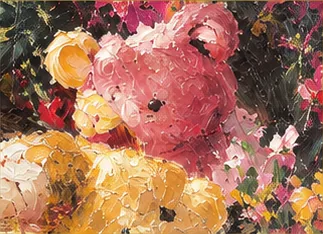
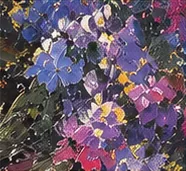
Detail: the flowers
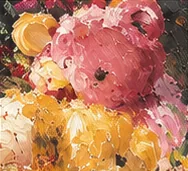
Detail: the pink teddy bear
Part Three

Painting Fur & Finishing Off

Bringing everything together

As the painting nears completion, we refine the details, strengthen the highlights and make sure every part of the painting belongs. The figures, toys, flowers and background are painted together, with loose, expressive brushwork, so the whole scene feels alive, unified and full of light.
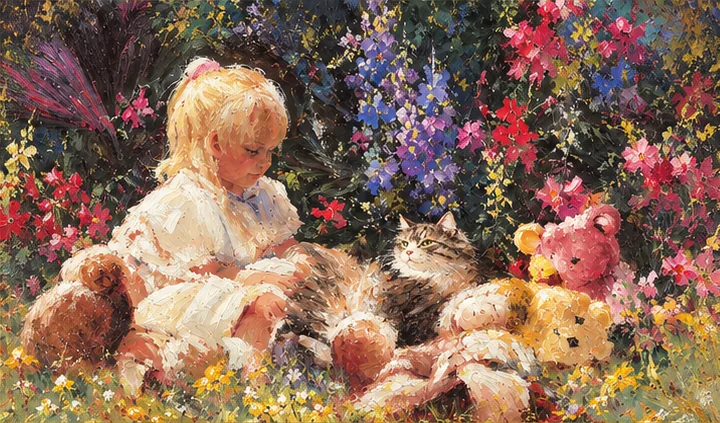
The finished painting, All My Friends
All My Friends — the finished painting.
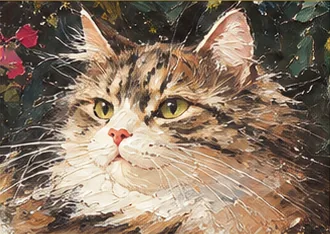
Detail: refining the cat
Refine the catRefine the cat with focused attention to the eyes, whiskers and the directional fur strokes. Use lively, confident brushwork to suggest the texture of the fur, keeping it fresh and expressive.
Detail: the teddy bears
Continue all the playersKeep working on all the players in the painting so the figures, grass and toys are tied together. Move around the canvas, adjusting colours and values to make sure everything belongs in the same light and atmosphere.
Detail: flowers in the background
Teddy bears & flowersBring the teddy bears and flowers up with selective highlights. Add touches of light to the tops of forms and key petals, but keep the brushwork loose. These highlights should support the main focal areas without competing for attention.
Detail: the meadow flowers
A million flowersAim for the effect of a million flowers rather than painting every flower one by one. Suggest the flowers with dabs and strokes of colour — this is the spirit of Impressionism, capturing the feeling of the scene, not every detail.

Tip: Step back regularly to check that the whole painting feels balanced. Look for a unity of light, colour and atmosphere, and add final touches where needed to bring everything together.

Part Four

In the Gallery

Towards Impressionism

As we look at The Explorer, we see a wonderful example of how impressionist painting invites us to see the world differently. The brushstrokes are loose, alive, and full of color, capturing not just what is there, but the feeling of a moment — the light, the air, and the atmosphere around it.
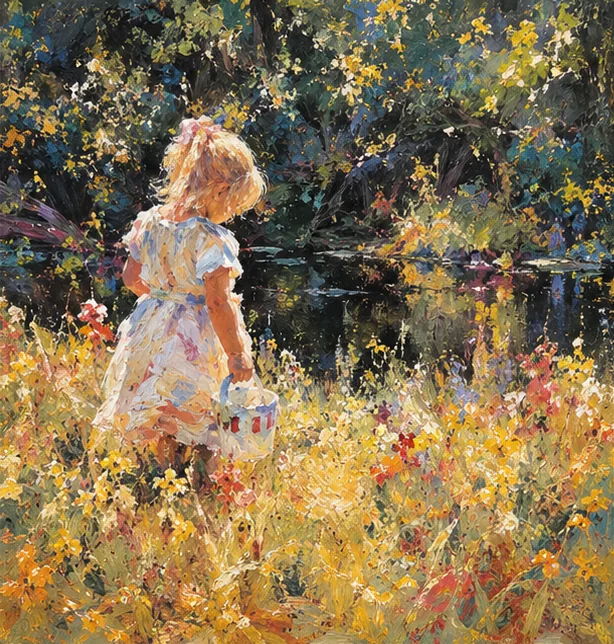
The Explorer: a little girl with a basket walks through a sunlit meadow towards a pond
The Explorer
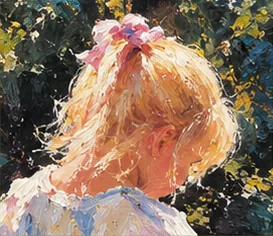
Detail from The Explorer: the girl's hair and ribbon
Detail from The Explorer: the meadow flowers

Like the little girl in All My Friends, this painting is not about counting every detail. Instead, it is about orchestrating the whole scene — the colors, shapes, lights and darks — into a unified, poetic image. It is the impression, the harmony of the whole, that brings the subject to life and speaks to the heart.

As you continue your own painting journey, remember that impressionism is not a style to copy, but a way of seeing. Trust your eye, feel the moment, and let your brushstrokes capture the beauty, the joy, and the life in the scene — just as we did with All My Friends.

“Step back and see the whole picture.”

Throughout your painting, repeatedly walk back about ten feet, close one eye, and look at the work as a whole. This helps you judge the overall unity of the painting.

Local colors are less important than the harmony of the whole. A successful painting should work both up close and from a distance.

Photo placeholder
Robert holding the book
The Book
Nostalgic Oil Painting Made Easy
This lesson comes from Robert’s book on painting nostalgic subjects in oils.
Enquire about the book